Home
About
Glimpses
Interviews
Photos
People and Places Here Mostly Faces
Contact

The Living Stories Collective

Everyone Has A Story
Home
About
Glimpses
Interviews
Photos
People and Places Here Mostly Faces
Contact

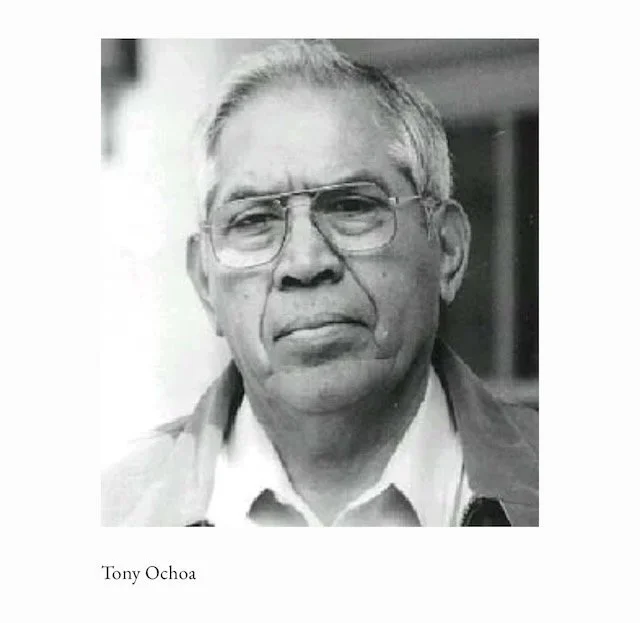
Tony Ochoa: My Past Is Like A Treasure

Tony Ochoa (October 24, 1925—December 24, 2015) was born in Santa Barbara and lived on a little street called Transfer Avenue, not far from Mission Creek. His father had come from Mexico in 1914 and started working at the Hollister Ranch. Tony had brothers and sisters, but his parents divorced, and he was raised by his father at the ranch. "It was just Dad and me," he says.

For awhile, Tony lived in a residence at the main Hollister Ranch headquarters, at the south end of the orchard. When Tony reached school age, his dad considered leaving the ranch so that Tony could attend school in Santa Barbara. Instead, a house was built for them at Gaviota, right by the beach.

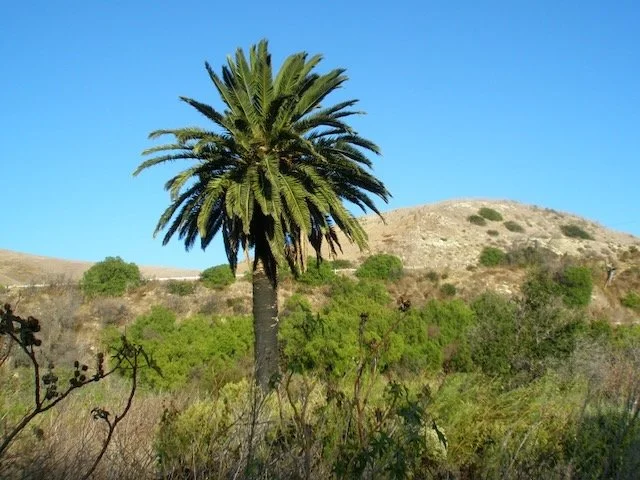
"It was a nice big house," said Tony, "and that's why Dad remained on the ranch, and I ended up going to Vista del Mar."As you are driving from the beach back onto the highway, you can see a palm tree that Tony Ochoa planted near his house many years ago. (There is a photo of it below.)

"I brought that palm tree up from the main ranch when it was just a little seedling," he told us. It still stands, tall and strong.

We asked Tony what changes he has seen in this area, and whether there are things that still seem the same. 

"How has it remained the same? Hardly at all. The store is gone, the railroad station is gone. The park area has changed. Of course the freeway is one big change. And there was no tunnel. There used to be an iron bridge before the tunnel was built. It was a landmark, but it was torn down. Even the course of the creek was diverted to make way for the freeway. They straightened it out so it kind of parallels the road now."

"This is the first time I've been to your school, and it's nice. I'm afraid the other changes do nothing for me."

The kids wanted to know what school was like when Tony was a boy.

"It didn't look like this," he replied, gesturing toward our lovely Vista de Las Cruces campus. "It was small, but it was a good, sound, well-built school. The upper and lower classes were all together in one room. Sometimes, when the crops came in, the children of the migrant laborers would join us, and the school got really crowded."

One of Tony's teachers was a lady named Irene Sawyer, who was, as he put it, "a beautiful person".  Another memorable teacher was Mrs. Gann. He also mentioned a man named Newt Moffit, who ran the Gaviota store for awhile and was the school bus driver and custodian. His wife was, in Tony's words, a "learned woman" who used to sub if one of the regular teachers was out.

He showed us a photo of a group of children taken in front of the school in the early 1930's. He is the small boy in Huck Finn overalls with a very somber expression on his face. In the background, we recognized the old wooden door which we could still glimpse when driving past the now-vacant school on Highway 101.

"My childhood nickname was Chico," he told us. "All my friends called me that, and that's how I was known all through the service. To this day, I still have two people who call me Chico."

We asked Tony about his childhood at the Hollister Ranch. Where would he walk? Did he have a special place he enjoyed visiting? Did he have a best friend? 

"My best friend was a boy named Isquil Valdez -- I called him Essy. His father worked on the railroad near Gaviota, and he was my nearest neighbor, a mile away. I'd walk over to his house and say 'you wanna play?', and we'd go down to the beach or someplace. Maybe we'd throw rocks at birds or go fishing off the pier. Maybe we'd walk along the railroad for a ways, or climb up to the chicken caves."

"No one ever said, 'Don't go here. Don't do that'. I would do anything I wanted. By the time I got to the creek, that's when I'd decide -- east or west, beach or railroad."

"I loved to go fishing at the pier, which wasn't in the same spot then -- it was about a mile down towards Santa Barbara. I'd fish until I was tired. Then I'd stop and pluck some big mussels off the rocks, take 'em home, and boil 'em."

"Oh, the fishing was the best. You didn't even have to know how to fish! You could catch fish from a clothespin with nuts from the railroad as sinkers. There were what we called Spanish mackerel, and there were perch as big as halibut, and there were halibut beyond the waves."

"The creek used to get so big when it rained that it would fan out, fed from tributaries, and when it flared around, the water would jump its bank. Most exciting, after it rained and flooded, the water would recede and deposit bodies of water filled with fish -- huge fish!"

"There were salmon and steelhead under the trestle. You could look down and it looked like a hatchery. The waves would come in after a storm, and the fish would be locked in."

"Of course, we played in the water, too. There were no surfboards. Body surfing was all we did. The bigger the waves, the better. But we knew to avoid the breakers that crash. We rode only the ones that crumble. Those were the beauties."

"One winter -- it must have been in the thirties -- it rained so hard, if you looked down toward where the Gaviota rest area now is, it looked like an ocean. Dad was across the creek on the other side and had to get back home. His horse brought him across! He grabbed his horse's tail and told him to go. You could just see that horses's head lunging through the water. Finally they came out safely on the other side."

"There were very few people living on the Ranch in those days," said Tony, "and the road was just dirt. There was no paving whatsoever. When it rained, tires would spin, sink, or skid. It was foolish even to get on the road. The way we went from the ranch to school at Vista del Mar was usually by horseback or walking. Sometimes I'd go in a two-wheel cart pulled by a pony!"

Tony's favorite childhood toy was a bicycle given to him by one of the Hollisters. Other than that, he had no toys, or made his own. He enjoyed games such as soccer and football, "but we got knocked down a lot, and there were no soft lawns to fall on. It hurt. There was always gravel and rocks imbedded in our knees."

One of the students asked Tony what kind of music he used to listen to.

"Music?" he replied, "I loved everything that had a rhythm. I didn't even have a radio -- only what we used to call a crystal set, and I'd listen to whatever I could pick up on that thing. Mexican music, whatever I could get. I always loved music. As a little fellow, I'd go down to the beach and ask people, 'You wanna hear me sing?' I'd sing 'em a Mexican song, and they'd pay me! I'd pass a hat and come home with my pockets heavy with coins. Then I'd go to town and buy candy for my friends. When you buy candy, you have a lot of friends."

"Christmas was the very best time of year, when we got all the good things we didn't usually have. There was lots of good hard candy, and a big red apple, and a Christmas tree at school."

"Most of the time, the natural things were treats for us. Over by the adobe right across the road from your school, somebody planted some cactus, which grew to enormous size. Well, we'd pick the prickly pears from the cactus and scrub off the thorns. We didn't have refrigerators in those days, so we'd put them into gunny sacks and leave 'em in the cool stream for awhile to chill. Then we'd take out that bag of prickly pears, take the skin off, and eat them like candy. They were so sweet and delicious! To get the really red ones, we'd go to the Hot Springs, but the sweetest ones were at the adobe. Sometimes we fried cactus succulents to make a nice dish, too."

"There used to be an orchard nearby, too. It was owned by Helen and Charlie Nichols. We'd get peaches, apples, pears. Vicente Guevara had an orchard also. We'd just rove around looking for good fruit."

"The Depression was hard times for people in town, but for us, it wasn't so different. We didn't have money, but we grew our own food, so we had what we needed. There were two cows just for Dad and me. We would barter and trade for what we didn't have. We'd take eggs, chickens, ducks, and cheese to friends in town, and to reciprocate, they'd give us Argentine beef in cans. We never had canned food -- everything we ate was fresh -- so to us, the beef in tins was a treat. Sometimes, I'd go down to the beach and sell fresh eggs to people. I'd sell 'em eggs and sing to them!"

"During the 1930's, fishing camps sprang up by the old pier. There was one at a part of the coast called Alcatraz, where the oil storage tanks are. There were Italian and Portuguese fishermen there, living as squatters. The Castagnolas would buy fish from them to sell in town."

"I don't know if you can ever get in there now," he continued, "but there must have been an Indian village there at one time. I'd find arrowheads there a lot. I'd bring 'em to school to put on display. I think there was a camp or a burial ground just before the turn-off to Gaviota Beach, too. And at one time, there were the remnants of an old adobe at Gaviota. The freeway covered everything."

"Once I even found a gun. I wish I had kept it. It was a lovely little gun with a pearl handle, just like you see in the movies. Some fellow said, 'Let me take it into town and see if I can find out how old it is.' He never came back."

The kids want to know if Tony had any special pets. He tells us about his horse, Sam, whom he dearly loved. Sam was a gentle bay with a white line on his forehead, and one white leg. Tony still remembers how terrible he felt when Sam died:

"If you could imagine what it would feel like to lose a buddy, well, that's how it was. There was nothing Sam wouldn't do for me. He would ride through anything. He was always there for me. I grew very close to him."

Tony also had four or five faithful dogs. "They always waited for me, wagging their tails, fighting to see who'd get to greet me first. They somehow knew when I would be coming home, and they watched for me."

One dog in particular was extremely loyal and intelligent. His name was Shep, and he was a "police dog". 

"I'd tell Shep to go get the cows or the horses and he'd round them up. I didn't have to do anything else."People along the coast had the newspaper delivered by train in those days. The train would pass through the ranch, and a man would toss a newspaper out at the canyon of its recipient. One of Shep's regular duties was to pick up the paper and bring it home."

One day the fellow on the train decided to tease Shep. Instead of throwing the paper, he held it back, and Shep kept running to get it.

“It was a sad day. Shep was killed by the train. I'll never forget it.”

For a moment, we all felt a sense of sorrow (and a little outrage) about Shep's fate. But Tony Ochoa is not a man who dwells on sad memories.

"My past is like a treasure to me today," he said, "I draw upon it still. There was so much to do! I never became bored. My life has been filled with adventures."

"When I left the ranch," he continued, "the whole world was an experience. I have been to Europe, Mexico, England, Canada...I flew with the 8th Air Force during World War II and got shot down over Europe. I landed in Belgium, in Brussels." (Tony was reluctant to talk about his war experiences, but being shot down over Belgium was clearly a significant episode, and there were echoes of both bravery and trauma when he referred to it.)

Tony has carried this sense of wonder with him to the present. He is highly regarded today for his work restoring antique furniture. He spoke with deep appreciation of the beauty and workmanship of the fine pieces he works on, some of which are over two hundred years old.

"These were put together by artisans," he said. "Their tools were patience and determination."Tony's shop is in Santa Barbara, and on his walls are framed photos from his ranch days. Those pictures mean a lot to him.

"I left the Ranch," he said, "but after all these years, the ranch has never left me.""These kids will one day leave, too," he went on, "but the ranch will be there. It's engraved in your heart, somehow. They don't know it now, but it will be there."

We asked Tony if he has any advice for the kids. "Don't play hooky. Listen to your teachers. Do the work even if it's hard."

Tony Ochoa has a dignified bearing but a twinkle in his eye. Not playing hooky must have been tough.
PostedJune 9, 2026
AuthorCyn Carbone
CategoriesSense of Place, Wisdom and Advice, Loss and Change
TagsHollister Ranch, fishing, planting, Santa Barbara, World War II, Changes, Gaviota, body surfing, Vista del Mar, The Depression, Charlie Nichols, Vicente Guevara, Castagnolas, Essy Valdez
CommentPost a comment

Marjorie Pérez Scriber

Marjorie Pérez Grant Scribner: A Little Bit Adventurous

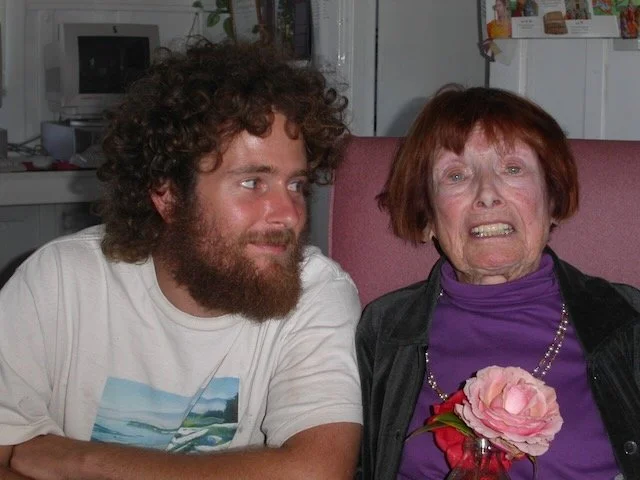
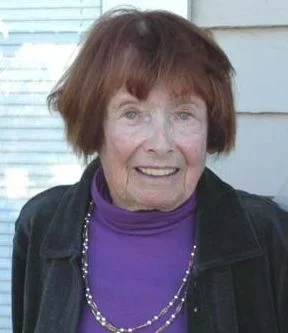
Marjorie Scribner was a woman of extraordinary eloquence and vitality who worked for good causes throughout her life. She visited our classroom at Dunn Middle School on January 17, 2003 escorted by her grandson Jacob Grant, and her warmth and personality are evident in the words that follow. She died a few years later, in 2009, at the age of 101. Her zest for life was inspiring.

I was born Marjorie Pérez on December 5, 1908. I think the only Pérez in the Manhattan phone book at that time was my father's office and a cousin. My children's last name is Grant, and my last name now is Scribner.

I'm 94 years old, and probably more changes have happened in this past century than in twice the time before. So many things we take for granted have only recently happened, and a lot of it was with no fanfare, no excitement, so you probably don't remember that it was ever different. And there have been two horrible world wars in my lifetime.

World War I, which began in 1914, was supposed to be the war to end all wars. I was aware of it. I was a small child, but we were living up in Alberta, Canada, a part of the British Empire, and the war was dramatic. Some people viewed it in a romantic way, and I'm sorry to admit that I did, too. There were a lot of Scottish people in Alberta, and there was a regiment of Scots there, and they had bagpipes. I was about five years old, and I thought it was wonderful! I'm ashamed to say that I would pray that the war would last long enough for me to grow up and be in it.

I think people now have a much better idea of what war is like, and in spite of President Bush, I think and I hope we're not going to war. I'm told there's a big demonstration in Santa Barbara this weekend. They've already had one, and that's a good sign. People are much more realistic.

A lot of the changes that I've seen were important things like airplanes. I can remember when a plane flew over, you'd hear it and you'd run out, and you'd look up because it was so exciting to see.

You never used to be able to go to Europe so easily, or even places closer, because you couldn't go long-distance flying. If you wanted to go to Europe, you'd go on a boat. It would take five or six days on a fast ship, or longer. And it was very nice, but you couldn't do a lot of the things you do now. The map was very different, too. European countries still had their colonies. There weren't so many small independent countries as there are now.

And a lot of the things aren't world-shaking but they really changed our lives. For example, cars are much more common, they go much faster, and many people have them. And the basic mechanics of living are much easier. When I first got married, we would have tea for breakfast because I didn't know how to make coffee, and there was no such thing as instant coffee. That came later. And all the frozen food, all prepared! You didn't have that. Or the canned things, which aren't nearly as tasty or good…

Simple things - movies, for instance, didn't have sound, and you'd have a piano player in the theater playing an accompaniment to the movie, whatever he or she thought would set the mood.

And telephones. The family would have a telephone, maybe even two, one upstairs and one downstairs. But you never took for granted that you could talk to people who were awhile away! My mother was a Californian and my father was a New Yorker, and when I was a child, we'd come out to California and spend Christmas with my grandmother. And they were all together one evening, family and friends, and I was in bed asleep because it was late when the phone rang, and they woke me up because somebody from New York had called on the telephone. This was such a world-shattering event! It's just as if somebody called you from Mars!

Christmas. We had candles on our tree and little cups that would hold a tiny candle and you bought lots of candles in all different colors and you clipped these onto the branches of the tree. You kept a bucket of water handy, although I never heard of a tree burning from the candles. But every Christmas there would be some fire from an electrical blow-up!

I always liked to read, and I read a lot, but I don't think I had a favorite book. I must tell you one book I thought was wonderful when I was little: Black Beauty. But I read it again just a few years ago and I never read a duller book! When you read it as a child, your receptivity is exactly right for it, but when I read it the second time, I'd read too many other books, spent too much time thinking about horses.

We didn't have games like you have now, but we had one game that had a board and you could manipulate the players with rods so it really did take some skill and some practice. We had to make more effort, I think, than you do now. And we did try.

When the Depression came in 1929, it was a dreadful, dreadful thing. You didn't have what you have now, unemployment insurance and the safety nets you now have. It had been a very prosperous economy, and suddenly it wasn't there anymore. Hoover was president and he didn't do anything to make it easier for people, but Roosevelt was elected, and he instituted a lot of reforms. You got things like unemployment insurance, and life became much easier. Little things you could see. Changes.

But there was also big opposition to Roosevelt as president. There were some people so opposed to him and what he was doing that they'd blame him for everything.

Some of the things that Roosevelt instituted were also communist ideals, but he was never a communist. There was never any thought of a communist government in this country. But because there had been no support from the government in the Hoover administration, a lot of young people became communists. A lot of them left the party when it became so oppressive, but a friend of mine went to jail because he would not inform on a friend of his who was a communist. The government wanted his name and would possibly have prosecuted him, so my friend went to jail, but he didn't join the communist party. I might have joined the communist party myself because of some of the ideals, but I never wanted to be part of any party as repressive as the communist party.

During this period the Fascists rose to power in Italy and Hitler rose in Germany, and I think when World War II finally came about, there was no doubt that this was a war that had to be fought. Hitler was so horrendous, and the Holocaust was worse than anybody could have imagined. But after the war was over, there was a time of relative peace, and now I'm afraid we're coming out of the wrong side again.

I certainly hope we don't go to war. Violence just breeds violence. A diplomatic solution takes more thinking, more doing, more planning, but then it's over and you don't have thousands of people dead and an even worse situation than you started with, because revenge is a terrible emotion. It doesn't lead to any good thing.

President Roosevelt's wife, Eleanor Roosevelt, was a woman with a wonderful social conscience. She herself made many changes, and I admired her from afar. She worked for women's rights and humanity. She had many admirers and was very charismatic.

I had a chance to get to know her a little bit one time, when I lived north of New York City, in Westchester County. It's a prosperous county with a lot of different communities in it. The Red Cross was very active in the war years, and there was a Junior Red Cross in the high schools. I was the chairman of the Westchester County Junior Red Cross. We were going to have a seminar one weekend at Vassar College. Their alumni house had meeting rooms as well as rooms where students could live for a few days. And we had the idea of asking Mrs. Roosevelt if she would come and be the chairman of this event. We didn't know her. We just called. But she couldn't have been more gracious. Yes, she would come up there. And she did.

And then came the day that she was going to speak to the students. There they all were, several hundred in a large room. She said she was slightly hard of hearing, so when a student spoke, she would walk down the aisle to wherever this student was and make sure that she understood everything that was said. She was just so outgoing and so wonderful! She was very, very good with all of the students, and later, she said she loved it.

I became an editor at Reader's Digest and their office was north of New York City in a country environment, very pleasant. But I like the city! When I got old like this, I liked New York City because it's very easy to get around in. There's good public transportation, and it's laid out in grid patterns so you don't get lost. And there's so much to do. Wonderful museums. The Museum of Natural History, the Metropolitan Museum of Art - both are world-class museums. And the New York Public Library! If any of you have been to New York, it's a great big building on 42nd Street and 5th Avenue and it has wonderful collections and exhibitions. I was a volunteer and docent there.

There's a beautiful park, Central Park, in the center of the city, and a number of small parks…and you can walk. Sidewalks are a great invention! Right now, New York has the lowest crime rate of any large city. There was a time when people were afraid to go out at night, but you don't have to be. Better to be a little bit adventurous.

I volunteered at a shelter in the church - St. George's Episcopal Church in Manhattan. I didn't know it would be so rewarding! There were so many different kinds of people. They didn't just come off the street; they were screened. But all kinds. There's some people who are chronically homeless, people who for one reason or other can't hold a job, but so often, it's just people who are down on their luck.

There was a French couple in the shelter. The husband had gotten an eye infection, and they'd gone to a hospital and he was given some medicine that was too strong, or a prescription that was mis-filled, and he became totally blind. They both had worked. He was a chef and she worked as a waitress in the same restaurant, but now she had to take care of her husband and couldn't do anything. They lost their apartment and were totally helpless.

Some people who came to the shelter even had jobs, but to get an apartment you need first month's rent and usually next month's rent as security and it's very hard if you have a minimum level job to accumulate any money. One man had a job working for a tailor and he came one night with a wonderful box of chocolate-covered strawberries to bring to the shelter. You just live from day to day, and so we'd have people in the shelter you wouldn't expect. We'd give them coffee and something to eat before they went to bed…wonderful people.

I broke my leg when I was out here, about four years ago. And when I got back to New York, I would go to a museum and get a wheelchair and wheel myself around or push it and sit down when I needed to, and I miss that kind of thing here.

But I love being here now and if I were in New York, I probably wouldn't be able to do a lot of things. This is a beautiful valley, and I love the mountains and I must say that I don't mind the climate. I miss New York. I miss the city, and I miss my friends. But this is the next best place.

I have three children. Jacob's father is the youngest. My daughter Jennifer is the oldest. I thought it would be nice to have twins, but that didn't happen. Her brother Jeffrey is just thirteen months younger. This was the beginning of the war and Hitler of course was frightening, and I thought a child shouldn't grow up alone 'cause your parents are going to die eventually and you need someone of your own generation who is close to you. It's insurance for a good life. So I had Jennifer and Jeffrey and I thought two children, a boy and a girl, was just right. But when they got older they began to think it would be nice to have a baby, and they finally persuaded their father, and then they all persuaded me. So I thought we'd have a very tender scene when I told them we were going to have a baby. And when they were getting ready for bed one night, I told them we were going to have a baby, and they exchanged glances, and Jennifer said, "Mom, we'd rather have a mouse." They'd been reading Stuart Little for a bedtime story. So here was my little announcement deflated. I said, "You may have a brother. You may have a sister. You will not have a mouse." And he didn't turn out to be a mouse. He was Philip, Jacob's father.

My birthday this year was wonderful because Philip and his wife Cassandra gave me a glider ride as a present. It was a small glider. I was in the front and the pilot behind me. We took off from a field close to the airport, but not the airport, so it was just us. It was very nice. The plane went up over the Valley, but high enough that I could see the ocean, and looking down was like looking at a map. Anytime we had driven we'd always go a different way, so I never could sort it all out, Solvang, Los Olivos, one from the other, but looking down from a glider, going more slowly than a plane, was like looking at a map. You could see the relationship of one community to another.

For my next birthday, I'd like to go up in a glider again. I like the feeling of going along with quiet, and when you're cut loose from the engine, the only sound is the sound of the wind.

There are so many things I'd still like to do but I can't now…

Marjorie with grandson Jacob Grant

PostedJune 9, 2026
AuthorCyn Carbone
CategoriesWisdom and Advice
TagsNew York, California, history, memories from early 1900s, Eleanor Roosevelt, The Depression, Roosevelt, World War II, getting old, being brave
CommentPost a comment

Powered by Squarespace.  Content used with permission from Design Trust For Public Art Space.